The Magnet Test: How Scrap Dealers Sort Metal in Seconds (21 October 2026)
21 October 2026 • ScrapRateToday
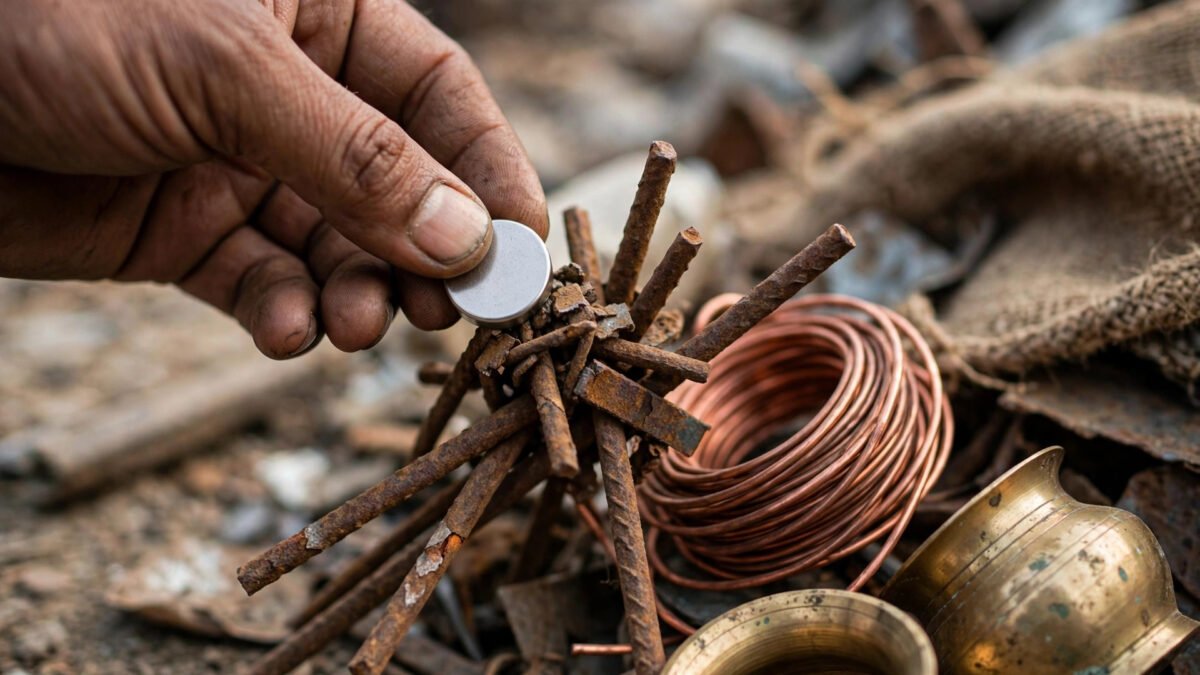
The magnet test is the fastest way to sort scrap metal: touch a magnet to the piece — if it sticks, the metal is ferrous (iron or steel); if it does not, it is non-ferrous (copper, brass, aluminium). Dealers run this check on every lot before buying, because one sorting mistake can cost hundreds of rupees per kilo. See what each metal is actually worth today on our today’s scrap rates page.
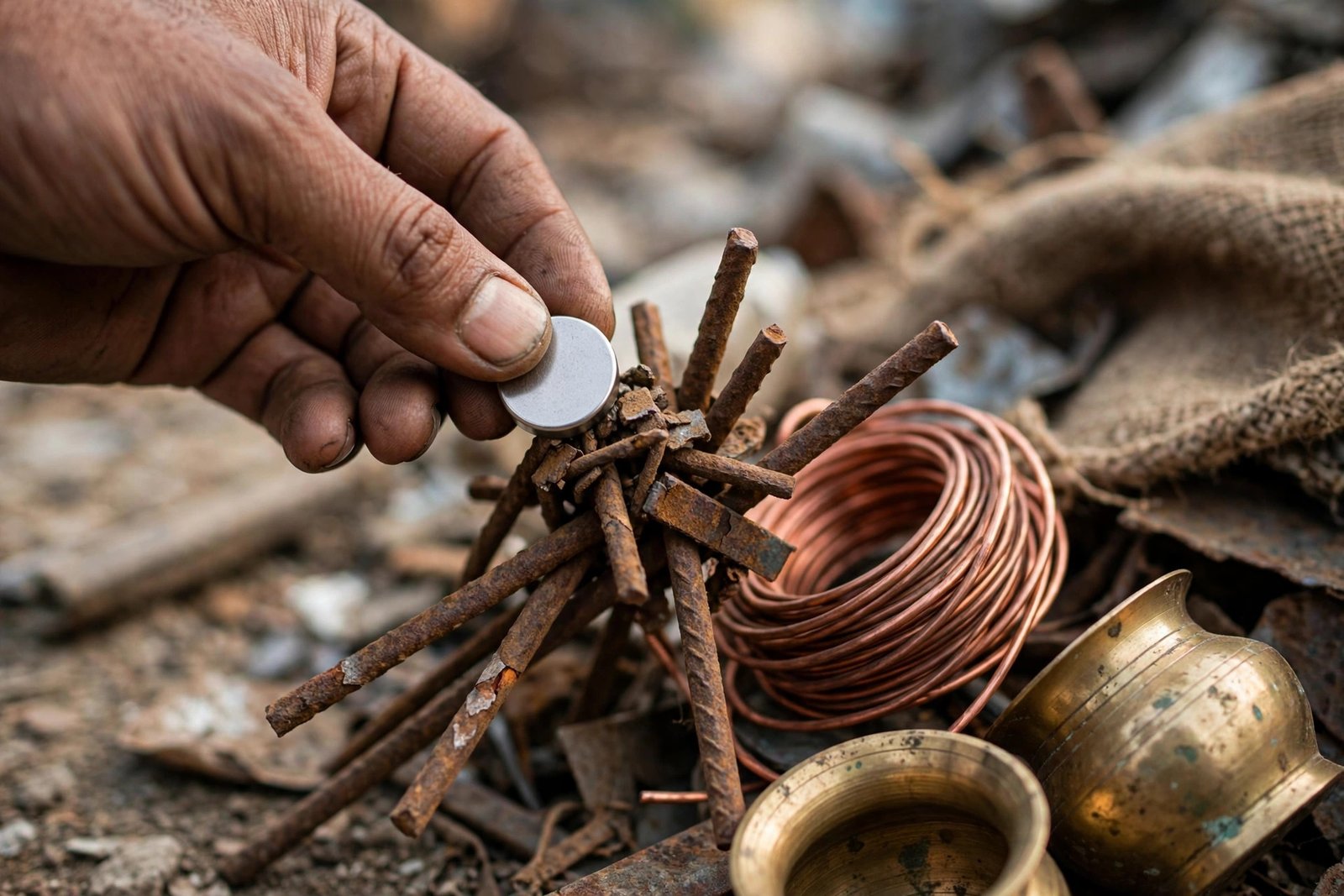
Table of Contents
What the Magnet Test Actually Tells You
The magnet test answers exactly one question: does this piece contain iron?
- Magnet sticks → ferrous metal. Iron or steel — the cheapest scrap on the yard. Delhi today: iron ₹38/kg, steel ₹42/kg (iron scrap rates).
- Magnet doesn’t stick → non-ferrous metal. Copper, brass, aluminium or stainless steel — the money metals. Delhi today: copper ₹627/kg, brass ₹422/kg, aluminium ₹160/kg (copper scrap rates, brass scrap rates, aluminium scrap rates).
That is the whole test. Ten seconds, two piles, no equipment beyond a pocket magnet. Every professional recycler starts sorting this way — Okon Recycling’s scrap metal purity testing guide calls it the most fundamental separation method in the trade.
How to Do the Magnet Test Right
A weak or careless test gives wrong answers. Do it like this:
- Use a strong magnet. A small neodymium disc (₹50–100 at any hardware shop) — not a fridge magnet. Weak magnets fail to grab thin steel and give false “non-ferrous” readings.
- Test a clean spot. Thick rust, paint or plastic coating weakens the pull. Scratch a small patch bare with a file first.
- Test several spots on big pieces. Pipes and fittings are often composites — a copper pipe with a steel joint, or a brass tap with an iron body.
- Sort immediately. Two piles: sticks and doesn’t-stick. Weigh each pile separately before negotiating.
What It Cannot Tell You
This is where beginners lose money — the magnet test has hard limits, and honest dealers know them:
- It cannot tell copper from brass from aluminium. All three are non-magnetic. Copper (₹627/kg) and aluminium (₹160/kg) both ignore the magnet, yet one is worth nearly four times the other. After the magnet test, use colour (copper = reddish, brass = yellow), a scratch test, and weight to separate them. Metal Men Recycling’s identification guide covers these follow-up checks well.
- Some stainless steel is slightly magnetic. Austenitic grades like 304 (the common one — Delhi ₹133/kg today, see stainless steel scrap rates) barely respond, but ferritic and martensitic grades do. A weak pull on shiny metal means: investigate further, don’t assume.
- Chrome plating fools the eye, not the magnet. A chrome-plated steel tap looks premium but the magnet sticks to the steel underneath. Trust the magnet over the shine.
The Money in Sorting Right
Sorting is where a dealer’s margin lives. Take a real example from today’s Delhi rates:
A seller brings a 10 kg mixed lot and calls it “all iron” at ₹38/kg — ₹380 for the lot. You test the lot and find 2 kg of copper wire hidden in the pile. Sold sorted, that copper is worth 2 × ₹627 = ₹1,254, plus 8 × ₹38 = ₹304 for the iron — ₹1,558 total. The dealer who skips the test and pays the mixed price leaves over ₹1,100 on the table in a single deal.
The reverse mistake is just as common: paying copper money for a lot that is half steel. Thirty seconds with a magnet before you pay prevents both.
3 Magnet Mistakes That Cost Dealers Money
1. Using a weak magnet. A fridge magnet won’t grab thin sheet steel. The piece reads as “non-ferrous”, gets priced as aluminium, and the buyer discovers steel at the yard. Use neodymium.
2. Testing only one spot. Composite pieces are everywhere in demolition scrap. Test every distinct part of the piece — the joint, the body, the fitting.
3. Assuming “doesn’t stick” means copper. It might be aluminium at ₹160/kg, brass at ₹422, or copper at ₹627. The magnet is step one of identification, not the whole job.
Frequently Asked Questions
Does the magnet test work on stainless steel?
Partly. Common 304 austenitic stainless is essentially non-magnetic; ferritic and martensitic grades show a weak to moderate pull. If a shiny piece pulls weakly, treat it as suspect stainless and verify with a spark or acid test before pricing.
Can a magnet tell copper from brass?
No — neither is magnetic. Use colour (fresh-scratched copper is reddish-pink, brass is yellow), weight (copper is denser), and sound (brass rings brighter when tapped).
What kind of magnet do scrap dealers use?
A small neodymium disc magnet, roughly coin-sized. It fits in a pocket, costs under ₹100, and is strong enough to lift small steel pieces outright — which also makes it a handy pick-up tool on the yard.
The magnet test takes ten seconds and protects every deal you make. Pair it with the day’s numbers: today’s live scrap rates for all 8 metals across 15 Indian cities.
Apna scrap bechna hai?
Chhota sa form bharo (20 second lagega) — hum sahi buyer se tumhari baat karwayenge. Koi charge nahi.